Bumblebees Get Their Unit Trays

I took some time this past weekend to do some work on the collection. I decided to move all the bumblebees into their own unit trays so they can be ready to go into the new drawers that are coming in the mail. The first step before all of this was to sort through and ID all the specimens I have labeled so far.

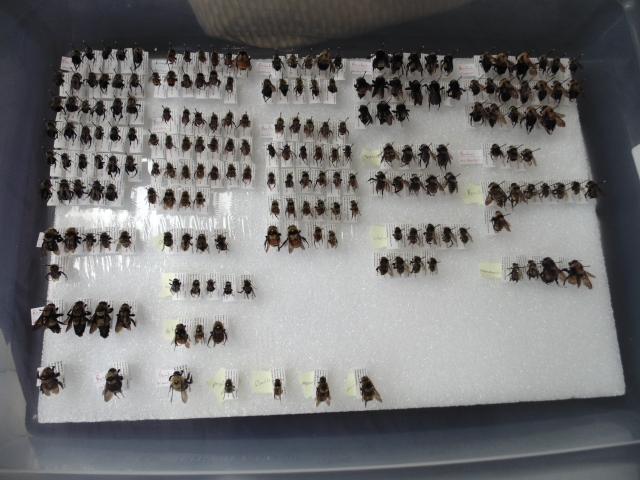
The end result of sorting and ID’s was this slab of styrofoam, which as you can see has the specimens grouped into their respective species, totaling 24 species.
dsc01961

The next thing I did was assemble the unit trays. Instead of regular trays I buy the folding unit tray kits. The downfall is that I have to put them together myself but they are cheaper in the long run than buying a whole bunch of regular trays at a time. When all is said and done they still look nice and tidy when all complete and I’ve always liked using them.
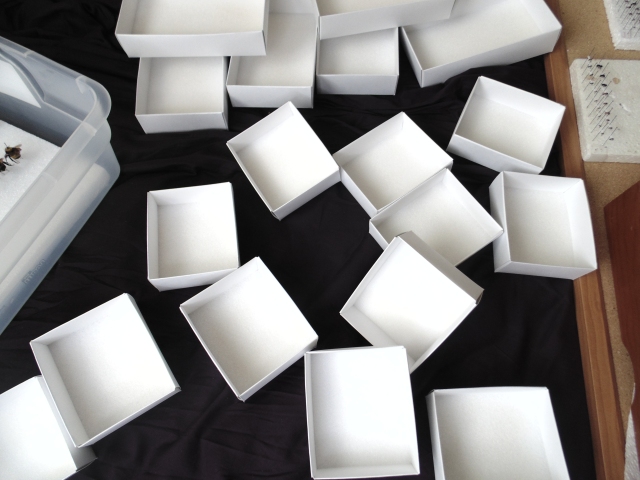
dsc01962

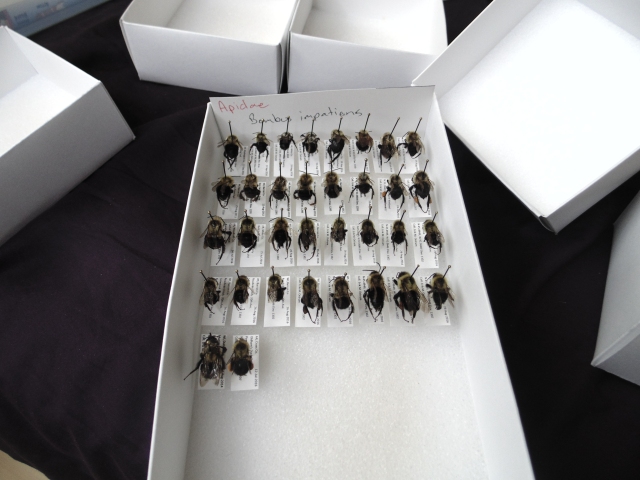
All that’s left to do is putting the bees into the trays. Here is a finished tray of Bombus impatiens. You can see the labeled card telling me what’s in the tray. I created a label card for each species which requires much measuring and cutting.
dsc01963

Finally after a bit of time I finished. These trays are now ready to be put into some Cornell Drawers which will be arriving in a couple days. Now that I’m finished with all the bumblebees, its time to move on to the sorted and ID’ed Lepidoptera.

dsc01964

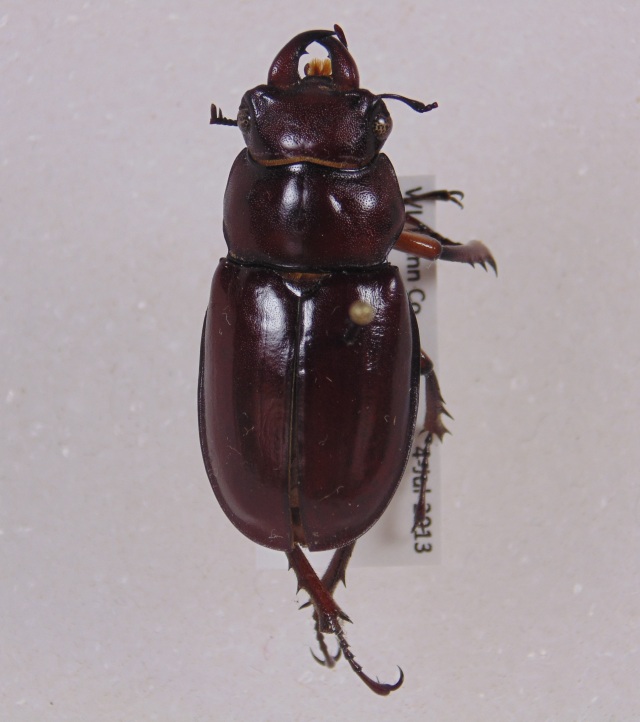
Lucanus placidus Say

Another of the stag beetle species found in the U.S. It’s around the same size as Lucanus capreolus but lacks the bicolored femurs and has multiple teeth on the mandibles instead of one like in L. capreolus.

This species can be found in the midwestern states from southern Canada down to Texas. I collected the single specimen I have in northwestern Wisconsin in the same general area where I also collected L. capreolus.

Like other stag beetles adults can be found at lights at night and larvae can be found in decaying logs and stumps.

lucanus placidus

Lucanus capreolus (Linnaeus)

One of the handful of stag beetle species in the U.S. Though not as impressive as Lucanus elaphus it is still a large sized species. The mandibles on the males don’t get very large but are still noticeable

This species can be found throughout the eastern U.S. and north to southern Canada. This was actually the first stag beetle species I collected in Wisconsin when I still lived there. The best way to tell this species apart from the others is the bicolored femora.

It can be found in deciduous forests as well as parks. Larvae can be found in rotting logs and adults can be found on sugar baits, sap, and can be found at lights.

lucanus capreolus

Other online sources:

https://bugguide.net/node/view/3107

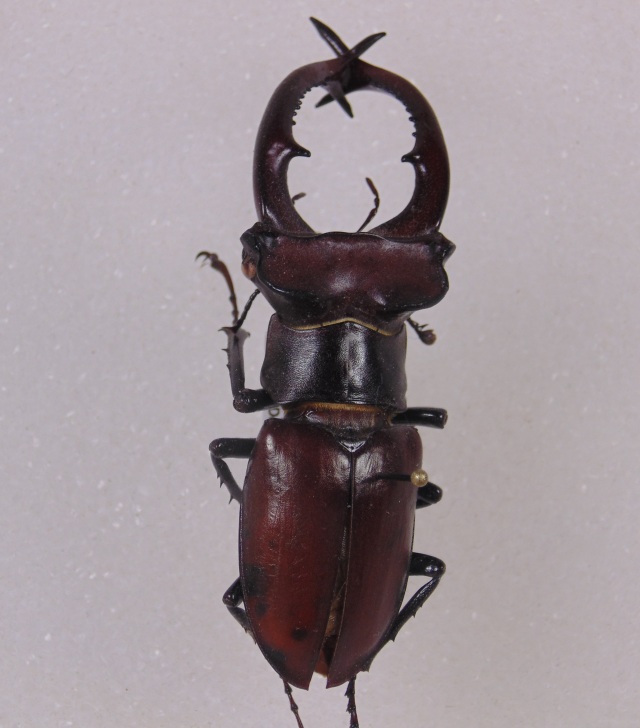
Lucanus elaphus Fabricius

One of the most impressive beetle species found in the U.S. would have to be Lucanus elaphus…..aka the giant stag beetle. Though North America isn’t particularly rich in stag beetle species, this is one that rarely fails to impress. This is actually a species I have never seen alive in person, my friend and roommate back in my college days collected the specimen while he was in North Carolina.

Males of this species are unmistakable while females can be confused with the couple other species present in the same range. Larvae feed and can be found in moist decaying wood while adults can feed on plant juice and rotting fruit.

This species can be found in the eastern U.S and can be found at lights at night. Though having a more widespread range, there is some concern surrounding conservation status.

Currently in the collection I only have one male specimen. It is always an attention getter and people are always amazed at the size of both the mandibles and the specimen as a whole.

lucanus elaphus

Other online sources:

https://bugguide.net/node/view/3105

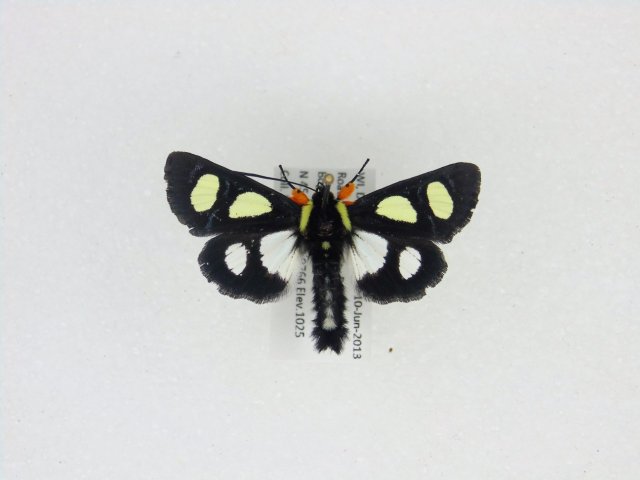
Alypia octomaculata (Fabricius)

This is a species that is always a treat to see. I was fortunate to see this species relatively often growing up and continues to bring me some sort of nostalgia every time I see one. The contrasting black and white coloration along with the orange legs makes this species a real beauty.

This species ranges throughout the eastern U.S with some scattered records in some western states. There are some other species that look similar so depending on the location you might need to double check to make sure you have this species. Though this is usually only true in the western and more northern parts of its range.

28061821_10215638326212262_2070763998629675373_o

Larvae can be found feeding on grape and Virginia Creeper. Adults are actually day flying as well and are often found taking nectar at various plants.Even though this species isn’t large by any means it is steal an eye popper and adds some color to the Noctuidae drawers. I have only a handful of specimens in the collection, all being from Wisconsin. I’m still on the hunt for some western specimens.

Other online sources:

https://bugguide.net/node/view/485

https://www.butterfliesandmoths.org/species/Alypia-octomaculata

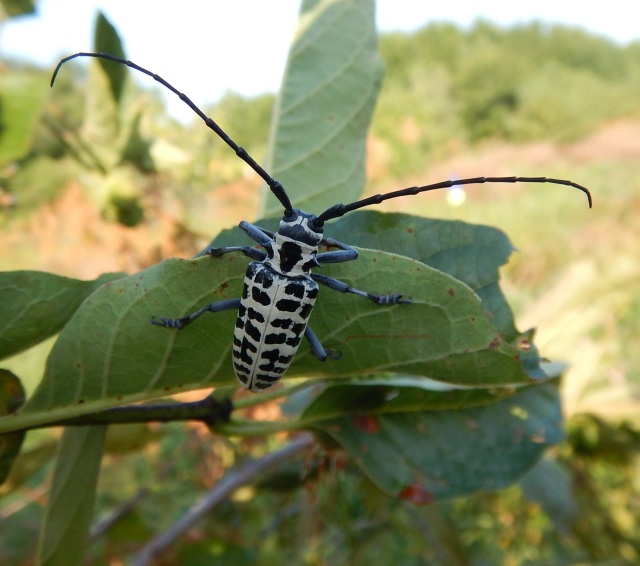
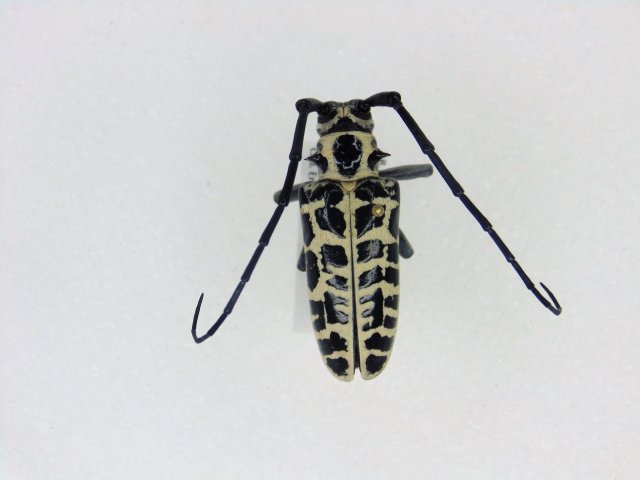
Plectrodera scalator (Fabricius)

The first time I saw this species I was completely taken aback by the both the size and bold coloration. I was able to encounter quite a few while working in the wetlands of eastern Arkansas. Impressive just sitting there as well as flying.

cborer

This is an unmistakable species marked in black and white coloration. This is a relatively widespread species commonly found in more wet areas where is can be found feeding on poplars, willows, and cottonwoods. There have been cases where this species has become a pest on the trees that its larvae feed on.

When people want to see some of my favorite species in the collection this species tray is always one of the ones I pull out and people are always in awe of them. I was able to collect a few specimens for the collection, all from Arkansas.

28161981_10215638320892129_5821679056818469216_o

Other online sources:

https://bugguide.net/node/view/7956

http://entoweb.okstate.edu/ddd/insects/cottonwoodborer.htm

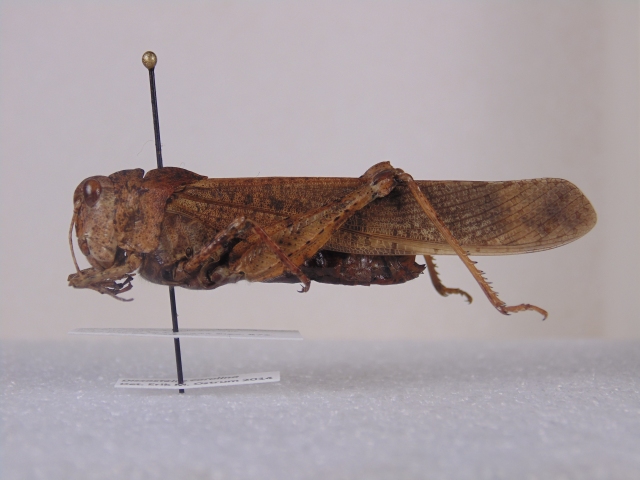
Dissosteira carolina (Linnaeus)

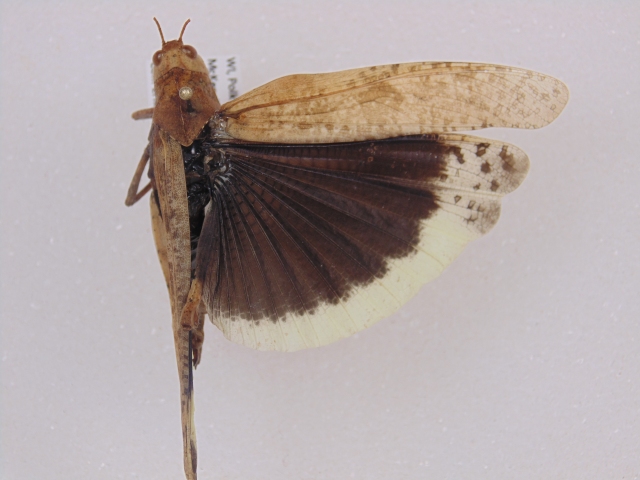
This is a large common species found throughout much of the lower 48 states. This grasshopper always got my attention since I was a little kid every time I startled one. The black and yellow hind-wing is a startling thing to see when one is not expecting. What I also like about this species is the variety of colors individuals can be. I’ve seen colors from tan to brown to brick red.

dsc00379

This is species is also quick to spit out a brown liquid in defense that can and will stain your fingers. One of the reasons this species is so widespread and common is because it can become quite abundant in disturbed areas and dirt roads, especially where there is bare ground which helps the grasshopper blend in.

dsc00377

As you can see from this spread specimen, the black takes up much of the hind-wing. For the more entomology inclined, when in flight it can look quite similar to Nymphalis antiopa (Mourning Cloak butterfly), which also sports the black and yellow coloration on the wings.

Currently in the collection I have a large number of individuals from a number of different states. Both spread and non-spread specimens are present as well as multiple different colors.

Other online sources:

https://bugguide.net/node/view/14827

http://www.uwyo.edu/entomology/grasshoppers/dica.htm

Limenitis weidemeyerii W. H. Edwards

This is a very bold colored species belonging in the same genus as the more commonly recognized Viceroy. The Limenitis genus as whole are all quite bold and colorful. I never seen this species until I moved out to Colorado and now it has become the most recognizable species I see flying about.

dsc01622

This species ranges throughout the Rocky Mountains here in the U.S and several subspecies are recognized. Larvae can be found feeding on aspen, cottonwood, and willows among others.

Since 2017 I’ve been able to add a few individuals to the collection, all from Colorado. As of right now I only have a handful of species and subspecies of Limenitis and I’m hoping to add some more variants soon.

Below you can see the bold coloration on the underside of the wings, which is my favorite part of this species.

27993464_10215638333492444_7750553528662639932_o

Other online sources:

https://www.butterfliesandmoths.org/species/Limenitis-weidemeyerii

https://bugguide.net/node/view/24571

Anaea andria Scudder

I was always fascinated with this species growing up after seeing some framed specimens. My chance to see one finally came when I was doing research in Arkansas. I was able to see quite a few individuals and managed to collect a few as well. I recently was able to get another individual from south Texas as well.

This is a widespread (though somewhat sporadic) species in the southern states but doesn’t really get noticed much. This is thanks in part to the excellent cryptic coloration of a dead leaf. This species is also known to have summer and winter forms, which unfortunately the collection is missing the winter form.

The collection currently holds a handful of specimens, mostly from Arkansas but also one individual from Texas.

28238051_10215638322172161_5953671733221524564_o

Other online sources:

http://entnemdept.ufl.edu/creatures/bfly/goatweed_bfly.htm

https://www.butterfliesandmoths.org/species/Anaea-andria

https://bugguide.net/node/view/13806

Xylophanes tersa (Linnaeus)

I’ve only encountered this species once while I was working in Arkansas. Luckily I was able to catch it for the collection. I was out collecting around the light pole and security light when this individual came flying in. I was really excited to be able to get a new species to the collection.

dscn2063

Xylophanes tersa can be found throughout much of the eastern U.S though its much more common in the southern states as it migrates north every year. This is an unmistakable species so getting a correct ID should be really easy. The abdomen is extremely pointed and it has a very streamline body. The hindwings have very contrasting black and yellow/white markings.

Caterpillar host plants include smooth buttonplant, starclusters, catalpa plus a few others.

Currently there is 1 specimen in the collection collected in eastern Arkansas.

dsc01438

Other Online Information:

https://bugguide.net/node/view/419

https://www.butterfliesandmoths.org/species/Xylophanes-tersa