Main Collecting Goal: Ant Nest Series

Last year was the first real intense year on collecting ants (Formicidae). To that end most of the collecting was done by picking up any random foragers I found. I decided to do this to give me just a simplified general understanding of what ants are present in the area.

This year I’m doing it a little differently, by collecting ant nest series. Basically this means I’ll be collecting a large number of individuals from nests to get the variations between workers (minors and majors) as well as the different castes (workers, queens, males). Obviously males are only present at certain times of the year and the queens can be difficult to find so collecting them is an added bonus. Ants are identified using the worker castes so getting the variety of them is the way to go.

DSC02027

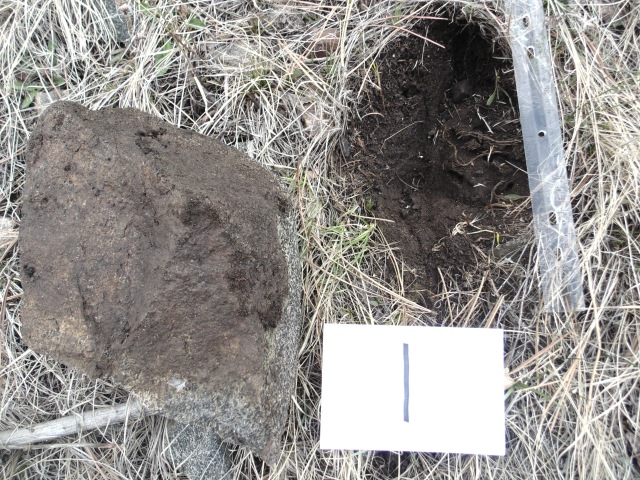
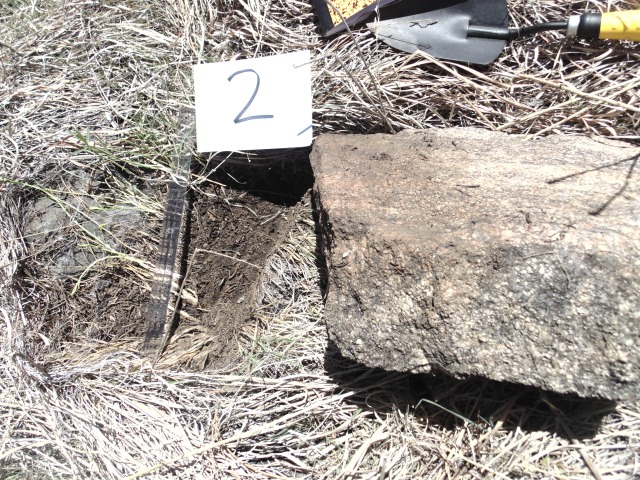
When I find a nest I take notes on location, size, appearance, etc. I collect the ants I want and try to find the queen. I also take notes on the ants behavior when disturbed and whether any larvae, pupae, or alates are present. I also note if I find more than one ant species in the same nest. As you can see I also take a picture of the nest with a ruler and a note card that shows which sample it is.

DSC02039

The 2019 season just started so I’m ready to really start collecting. The first outing was this past weekend and I collected six samples so far. I could have gotten more but like a noob I only brought a few vials and ran out..I should have known better…..oh well.

IMG_20190407_124106397

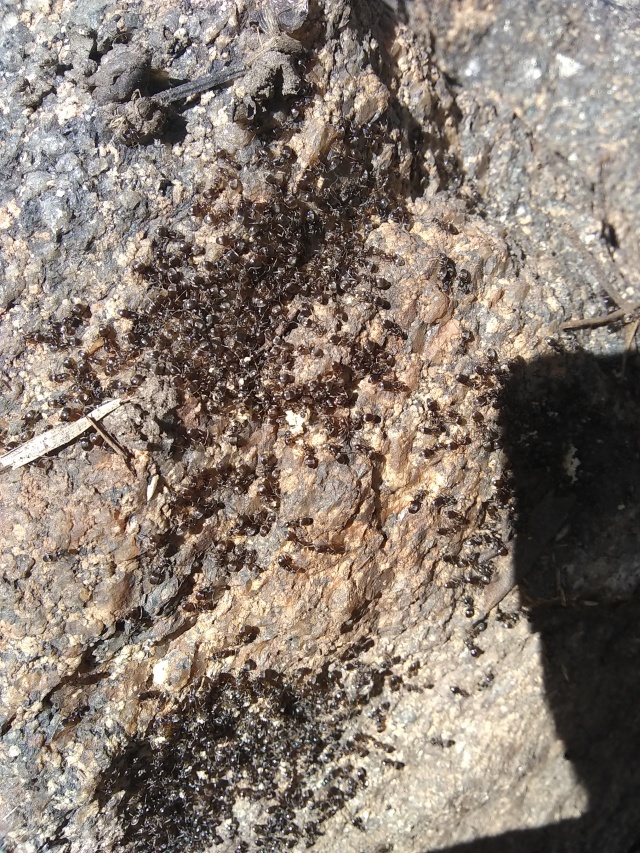
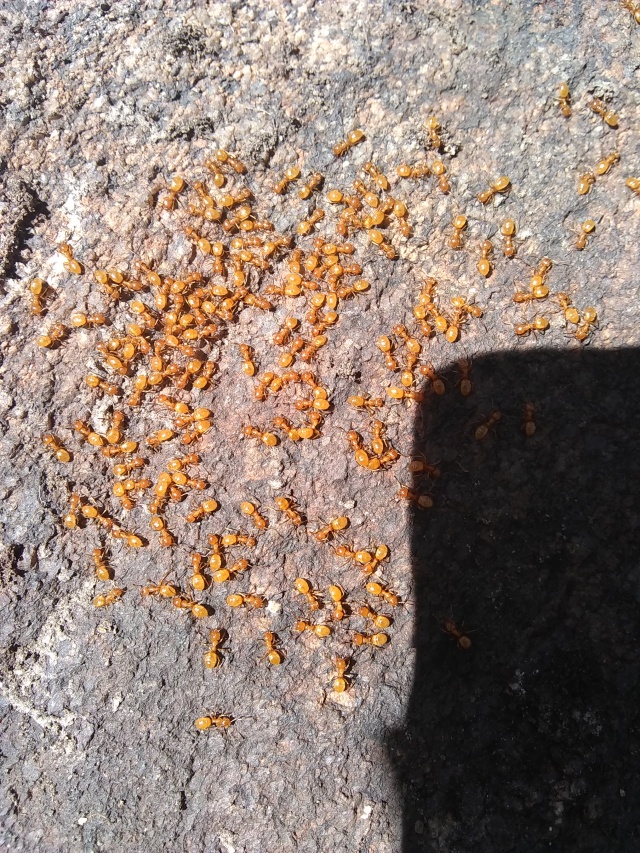
Here are some pictures of some of the ant nests I took some series of.

IMG_20190407_123924918

Keeping Busy on the Collection

The blog has been put on the backburner lately. I’ve been super busy working on the collection and trying to get everything caught up, which to my surprise I almost am. Within the next couple weeks I should have an update specimen count for the collection and it will be just in time before the 2019 collecting season gets in full swing.

A big step took place the past couple weeks that will allow me to make huge progress and actually start identifying much of the collection. I’ve been allowed to work and use the facilities at the C.P Gillette Museum of Arthropod Diversity at Colorado State University. I now have the space, the equipment and the resources to process and ID a large number of insects at a time which will allow my collection to expand greatly. I’ve also started to help ID some of the unsorted material at the museum and plan on expanding their ant collection.

IMG_20190316_115558466

As for my personal collection, I’ve been going through and identifying the ants. I’m down to the last few specimens from Wisconsin and then I’m going to start on the Arkansas specimens. It shouldn’t take to long as there aren’t a whole of specimens from that state.

IMG_20190316_115553513

These are the first couple rounds of Wisconsin ants I’ve gone through. The last round I’ll finish this week. These were all collected mostly in 2015 which is a few years before I decided to focus much of the collection on ants. I’m really hoping to get a good sample of Wisconsin ants in the next couple years, I have my whole family as well as college professors there, so I’m hoping to enlist their help.

IMG_20190321_171820367

Actias luna (Linnaeus)

This species is probably one of the most beautiful moths found in the eastern U.S. I’ve been extremely fortunate to encounter luna moths rather regularly growing up in Wisconsin. Their large size coupled with the green coloration makes this species easily identified and admired.

This is one of the more common Saturniidae species found throughout the eastern U.S. The life cycle is similar as other giant silk moths here in the U.S. The caterpillars can be found on a wide variety of plants including birch, sweet gum, and walnuts among many others. Like other silk moths the adults do not feed and only live for a very short time.

Even though I live in Colorado now and out of range of the luna moth I still vividly remember always seeing them growing up. I currently have a handful of specimens, mostly from Wisconsin but also from Arkansas.

DSC01436

Other Online Sources:

https://www.butterfliesandmoths.org/species/Actias-luna

https://bugguide.net/node/view/562

Differentiating the Tiger Swallowtails

The tiger swallowtails are large conspicuous butterflies that are found throughout the U.S. This post is all about how to identify the different species. I’ve outlined the key traits in each photo with a red line to show you where to look.

Papilio canadensis VS Papilio glaucus

These two species are ones that people get mixed up the most, in my opinion at least. The ranges of these two species luckily only overlap in the northern Great Lakes states and the northeastern states. I’ll include a link to their species pages that show their ranges

https://www.butterfliesandmoths.org/species/Papilio-canadensis

https://www.butterfliesandmoths.org/species/Papilio-glaucus

One characteristic that is difficult to see unless you have the specimens next to each other is the size difference. Papilio glaucus is slightly larger. I’ll start by showing the main difference on the dorsal side.

Papilio canadensis

You can see the area I marked showing a really thick black line on the inner margin of the hind-wing.

DSC01973 - Copy

Papilio glaucus

In this species you can see the line on the inner margin as really thin.

DSC01975 - Copy

The markings I just showed you should be one of the first things you look for. There is also a trait on the ventral side of the forewing that you can look for as well, though this trait might be useful in all cases.

Papilio canadensis

The are I have highlight shows the marginal spot that appear to be a continuous band.

DSC01974 - Copy

Papilio glaucus

In this species species the marginal spots have black line interrupting them appearing more chain like. Be careful though as some individuals may have less black and may appear similar to the marginal spots of Papilio canadensis.

DSC01976 - Copy

Once you start seeing the differences over and over you start to get the hang of it. Like most other things it’s repetition. Luckily for those of us in the western states it is a little easier.

Papilio rutulus VS Papilio multicaudata

These are the two primary tiger swallowtail species in the western states. Luckily it is pretty easy to tell the difference between the two. One difference is the notable size difference between the two. Papilio multicaudata is noticeably larger generally. For this comparison all I need to show is the dorsal side.

https://www.butterfliesandmoths.org/species/Papilio-multicaudata

https://www.butterfliesandmoths.org/species/Papilio-rutulus

Papilio rutulus

The tell all difference is the number of tails. As you can see this species only has one tail.

DSC01981 - Copy

Papilio multicaudata

Unlike all other tiger swallowtail species native to the U.S. this species has two tails, hence its species name.

DSC01979 - Copy

So far so good I hope. I only really have one more comparison to make.

Papilio glaucus VS Papilio rutulus

For the most part the ranges of these two species don’t overlap. In typical fashion though there are always strays and times where these two species can indeed be found in the same location. I’ll also point out that this comparison is also the same way to differentiate between P. rutulus and P. canadensis as well.

For this comparison you have to look at the ventral side of the hindwings.

Papilio glaucus

In the area I highlight you can see the marginal spots have a decent amount of orange in them.

DSC01976 - Copy

Papilio rutulus

In this species there is no orange present at all except for the little bit at the very end.

DSC01982 - Copy

As you can see once you actually know what to look for you should have no problem identifying these amazing butterflies to species.

Papilio eurymedon

In the western states there is a species that looks superficially like the tiger swallowtails but should not be confused with them at all. You can easily tell this species about by the pale coloration.

https://www.butterfliesandmoths.org/species/Papilio-eurymedon

Papilio eurymedon

The pale color of this species make it pretty unmistakable compared to the tiger swallowtails.

DSC01977

DSC01978

Other Notes:

Just as you think you were done….wait, there’s more!

In the eastern U.S., in the higher elevations of the Appalachian Mountains there is yet another species of tiger swallowtail, Papilio appalachiensis. This species is not commonly encountered and the majority of people in the states probably never will. I don’t have any specimens in my collection nor have I seen this butterfly in person yet. It looks just like Papilio glaucus but larger and there are some other more detailed differences. I’ll add a couple links about this species so you read about it.

https://www.butterfliesandmoths.org/species/Papilio-appalachiensis

https://bugguide.net/node/view/60430

Okay, now we are done. I know this post was a long one but I hope it gives you the information you need to help differentiate these species. As always if you have any question feel free to contact me.

The Green Sweat Bees- Identification Tips

I see many pictures of bees and a common sight among those are the green sweat bees. What most people probably don’t realize is that there are 4 different genera of green sweat bees here in the U.S. At first glance they might all look alike but there are some key differences among them. This post will show you how to tell the difference between all 4 though keep in mind not all these traits are easily seen just from photos.

Agapostemon:

Larger species, males have black and yellow abdomens and are easy to ID to genus, the second picture is of a male. The females of most species are all green and look similar to the other Genera. The easiest trait to look for is the VERY prominent rim surrounding the propodeum.

agid
image2 (1)

Augochloropsis:

Larger species. The best way to ID is by looking at the tegula (where the wings attach to the body). The tegula is “D” shaped and has the metallic green covering.

augochloropsis

Augochlorella:

Extremely similar to Augochlora and the best and easiest way to tell them apart is by looking at the face. When you compare the two pictures side by side you can see the difference quite easily. In Augochlorella there is no lobe that extends down and is just a simple right angle.

augochlorella

Augochlora:

In Augochlora there is a lobe that extends down onto the clypeus that is clearly seen in the photo.

augochlora
I hope this post was able to help you out and you found it useful. If you have any question feel free to contact me.
Collection Update 1-Feb-2019

I figured I’d start doing frequent updates to let you all know what’s been going on behind the scenes. I’ll likely keep these posts short and sweet since it’s boring to just read forever.

This past week I’ve been making progress on labeling everything that needs labels. I finished pointing the ants which is a relief so I’ve been focusing mainly on labels now. I went to the store to get the last couple items I needed to begin processing all the bowl traps. I’ll start doing that this weekend and I’ll also do a post and video about that process.

If I keep going at the rate I’m at I should have all my pinning and labels caught up and have a new total specimen count before the season really gets going.

Tonight I also purchased some more equipment for this upcoming collecting season.

Bumblebees Get Their Unit Trays

I took some time this past weekend to do some work on the collection. I decided to move all the bumblebees into their own unit trays so they can be ready to go into the new drawers that are coming in the mail. The first step before all of this was to sort through and ID all the specimens I have labeled so far.

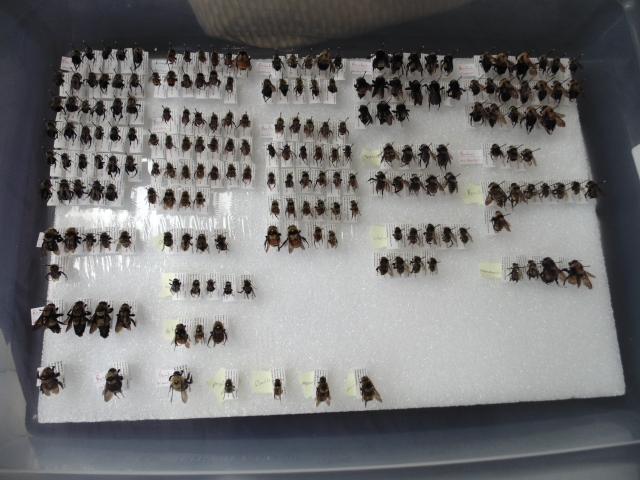
The end result of sorting and ID’s was this slab of styrofoam, which as you can see has the specimens grouped into their respective species, totaling 24 species.

dsc01961

The next thing I did was assemble the unit trays. Instead of regular trays I buy the folding unit tray kits. The downfall is that I have to put them together myself but they are cheaper in the long run than buying a whole bunch of regular trays at a time. When all is said and done they still look nice and tidy when all complete and I’ve always liked using them.

dsc01962

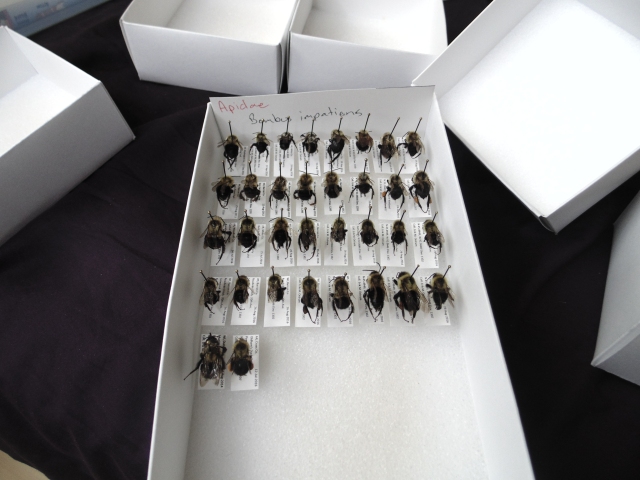
All that’s left to do is putting the bees into the trays. Here is a finished tray of Bombus impatiens. You can see the labeled card telling me what’s in the tray. I created a label card for each species which requires much measuring and cutting.

dsc01963

Finally after a bit of time I finished. These trays are now ready to be put into some Cornell Drawers which will be arriving in a couple days. Now that I’m finished with all the bumblebees, its time to move on to the sorted and ID’ed Lepidoptera.

dsc01964

Revision of the genus Tetramorium

Across much of the U.S. ant wars are commonly seen taking place on sidewalks and are always a spectacle to behold. This ant is in the genus Tetramorium but confusion on the exact species persisted for many years. It was also introduced from Europe which has a few different species in the genus.

At first it was placed as the species Tetramorium caespitum but that was eventually changed and it was then known as Tetramorium sp. E for a decent period of time. Finally in 2017 a paper was published that shed light on the subject and finally settled the matter. T. caespitum was confirmed as a species but it was still only in Europe. They raised Tetramorium immigrans to species level and assigned this name to the North American specimens and finally ended the long road of confusion.

So now when you see the pavement ant wars while on your walk you can say those are officially Tetramorium immigrans.

Article:

Herbert C. WAGNER, Wolfgang ARTHOFER, Bernhard SEIFERT, Christoph MUSTER, Florian M. STEINER & Birgit C. SCHLICK-STEINER just published “Light at the end of the tunnel: Integrative taxonomy delimits cryptic species in the Tetramorium caespitum complex (Hymenoptera: Formicidae)”. Myrmecological News 25: 95-129 Vienna, October 2017

https://www.researchgate.net/publication/322663055_Light_at_the_end_of_the_tunnel_Integrative_taxonomy_delimits_cryptic_species_in_the_Tetramorium_caespitum_complex_Hymenoptera_Formicidae